


You typed "is Freedom Debt Relief legit" into a search bar, maybe right after an ad promised to cut your credit card balance in half, maybe right before you were about to hand a stranger on the phone your bank account and routing numbers. That instinct to check first is a good one. Here is the direct answer: yes, Freedom Debt Relief is a real, licensed debt-settlement company. It is also a company that paid $20 million in consumer redress and a $5 million penalty to settle a 2019 federal CFPB case, and a separate $3.6 million to New York State in a 2020 case, over how it sold and charged for that service. Both facts are true at once, and the rest of this piece lays out the documented record instead of the marketing version.
Freedom Debt Relief is the kind of business the Consumer Financial Protection Bureau itself once described, in its own announcement of the settlement, as "the nation's largest debt-settlement services provider." The company says it discloses its fees in full before enrollment, and self-reports a 4.5 out of 5 rating from 50,300 reviews on its own facts page. This same facts page doesn't mention the federal lawsuit, the state settlement, or either dollar figure anywhere on it. A company's own marketing page is never where you find its regulatory record. Here is where you find it.
Freedom Debt Relief Lawsuit: The 2019 CFPB Case
The Consumer Financial Protection Bureau sued Freedom Debt Relief and its co-founder, Andrew Housser, on November 8, 2017, in the U.S. District Court for the Northern District of California, case number 3:17-cv-06484. The case rested on two legal grounds: the Telemarketing Sales Rule, a Federal Trade Commission regulation that bans advance fees for debt relief services, and the Consumer Financial Protection Act of 2010, the law that lets the CFPB sue companies for deceptive or abusive practices. The case closed almost two years later with a stipulated final judgment dated July 9, 2019.
Read the allegations in the Bureau's own words rather than a paraphrase. Under the Telemarketing Sales Rule, the CFPB alleged FDR was "charging advance fees and failing to inform consumers of their rights to funds they deposited with the company." Under the Consumer Financial Protection Act, the Bureau alleged FDR was "charging consumers without settling their debts as promised, charging consumers after having them negotiate their own settlements with creditors, and misleading consumers about the company's fees and its ability to negotiate directly with all of a consumer's creditors". Stated plainly, the government's case was that some clients paid for a service the company did not fully deliver, sometimes got billed after negotiating their own settlements, and were not always told the truth about how the fees actually worked.
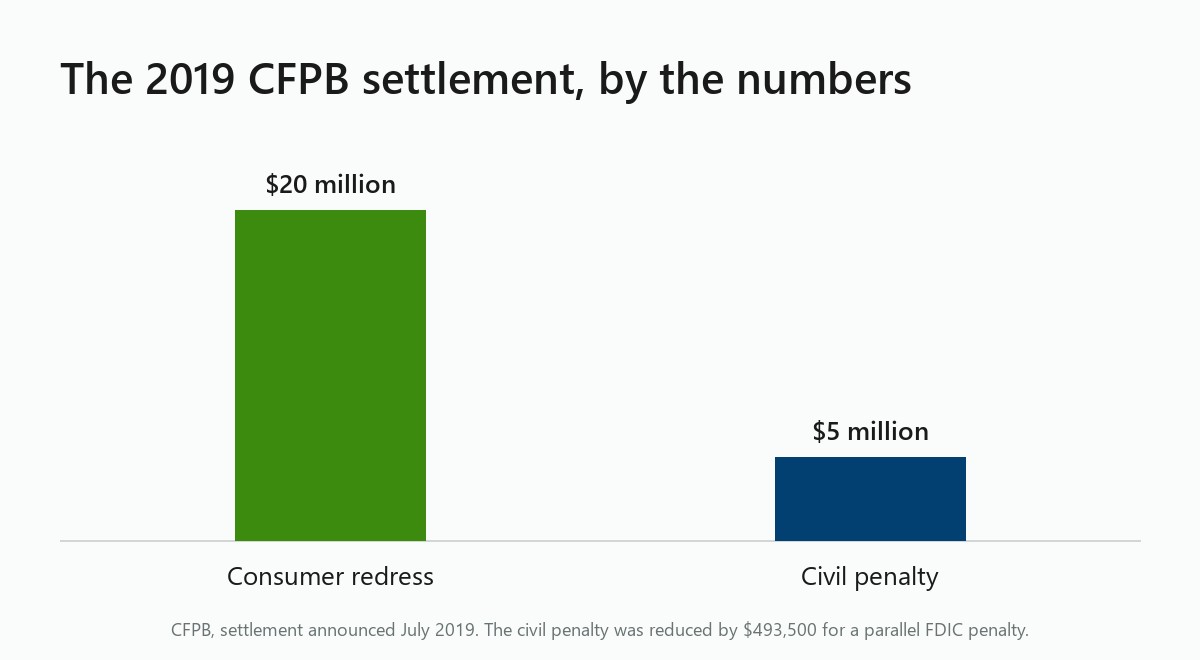
The judgment ordered $20 million in redress to affected consumers and a $5 million civil money penalty under the Consumer Financial Protection Act. The CFPB waived collection of $493,500 of that penalty, and its release explains why: FDR had separately been penalized by the FDIC for related conduct, so the two enforcement actions were coordinated rather than stacked on top of each other in full. The CFPB's release is the only source here for that FDIC penalty, and it gives no figure.
The 2020 New York Settlement, a Separate Case
Keep this one apart from the CFPB case in your head. This is a separate action, brought by a state regulator instead of a federal one, over conduct the CFPB's case never touched. On June 23, 2020, New York Attorney General Letitia James announced a $3.6 million restitution settlement with Freedom Debt Relief. This $3.6 million has no connection to the CFPB's $20 million or $5 million figures, so don't add them together. Two different regulators addressed two different sets of conduct.
New York's action alleged FDR violated a prior 2011 settlement it had already made with the state, this time by advertising savings figures without disclosing that those savings applied to only about one-third of the New York consumers who actually used the program. Line the dates up and a pattern appears on its own: a 2011 New York settlement, an unrelated 2019 federal settlement, then a 2020 New York settlement for violating the terms of that 2011 order. Three separate regulatory actions touching one company across nine years is a fact worth sitting with, regardless of how any single case gets characterized afterward. Regulators came back to this company after alleging it violated the terms of its own 2011 settlement.
Freedom Debt Relief Fees: How Much It Costs Today
None of the above describes how FDR operates right now. Per the company's current FAQ page, FDR charges 15 percent to 25 percent of the total enrolled debt, with the exact rate varying by state of residency and the amount you enroll. On $20,000 of enrolled debt, that range runs $3,000 to $5,000, before a single dollar goes to a creditor.
FDR states it collects no fee upfront, and only gets paid "after a settlement is authorized by the client and the first payment is made" toward that settlement. This structure matches the fee-timing rule spelled out later in this piece for evaluating any debt settlement company.
There's a second fee that isn't FDR's own. Enrolled clients open a dedicated settlement account with a third party, Crossroads Financial Technologies, which charges its own $9.95 one-time setup fee plus $9.95 a month for servicing, and FDR states it does not share in that fee. Run those two disclosed numbers across FDR's own stated 24 to 48 month average program length, and the CFT charges alone add up to roughly $250 to $490 over the life of a program, on top of whatever FDR itself collects at settlement.
What Debt Settlement Does to Your Credit
The CFPB does not soften this part in its own consumer guidance: "Using debt settlement services can have a negative impact on your credit scores and your ability to get credit in the future." The credit hit is baked into how debt settlement works, whether or not everything else about the program goes according to plan.
Settlement generally requires you to stop paying enrolled creditors while money accumulates in the dedicated account, and the CFPB is direct about what that gap can trigger: it "may lead to a creditor filing a debt collection lawsuit against you" before any settlement is ever reached, while late fees and penalty interest keep accruing on the unpaid balances in the meantime. The same silence that lets FDR eventually negotiate a lower payoff is the same silence that can grow your debt and expose you to a lawsuit before that negotiation ever happens.
Reviewers describe a gap between what they expected going in and what the program actually delivered: credit score damage that felt worse than expected, and fees they say they did not fully anticipate. Clients who reported the program matching what they were told upfront also tended to describe feeling kept informed about where their account stood. Treat that as a pattern in how enrollees talk about the experience, drawn from aggregated reviews rather than a single verified statistic.
If your real goal is avoiding the credit hit altogether, ways exist to consolidate debt without taking out a new personal loan at all. One nurse cleared $24,000 in credit card debt over 28 months on a disciplined payoff plan that never involved a settlement company.
Remember that FDR's own average program runs 24 to 48 months. During that stretch, enrolled accounts can sit unpaid while collectors call and a creditor weighs whether to sue rather than wait for a settlement offer. A shorter program with fewer enrolled debts shrinks that window. A longer one, or one where you add debts partway through, stretches it. Ask specifically how your own debt load and monthly deposit amount translate into a timeline before you enroll.
The Tax Trap: Forgiven Debt Is Often Taxable Income
This part rarely shows up in debt-settlement marketing anywhere, and it is not unique to FDR. Per IRS Topic 431, "if your debt is canceled, forgiven, or discharged for less than the amount owed, the amount of the canceled debt is taxable." If a creditor agrees to settle a $10,000 balance for $6,000, that $4,000 difference generally counts as income, reported to you and to the IRS on Form 1099-C.

That canceled-debt income typically gets reported as ordinary income, generally through Schedule 1 of Form 1040. Two exceptions matter here. Debt discharged in a Title 11 bankruptcy proceeding is not taxable. Debt canceled while you were insolvent, meaning your total liabilities exceeded your total assets immediately before the cancellation, can also be excluded, but claiming it requires filing Form 982, and the exclusion is capped at the amount by which you were insolvent.
Neither FDR's FAQ page nor its facts page surfaces this 1099-C exposure anywhere in its fee or program explanations. That gap is worth knowing about before your first deposit, so a tax bill next spring doesn't catch you off guard.
Questions to Ask Any Debt Settlement Company Before You Sign
Everything below applies broadly, to any debt settlement company you're weighing. The rules and guidance behind it apply across the whole industry, and the same red-flag pattern shows up wherever aggressive debt-relief and loan marketing overlaps.
Start with the law. Under the FTC's Telemarketing Sales Rule, a debt settlement company legally cannot collect fees until it has settled or altered at least one of your debts and you have made at least one payment on the new arrangement. A company asking for money before that point has already broken federal law.
The CFPB names specific red flags to watch for in any provider:
- Guarantees to settle your debts for a specific percentage
- Claims of a "new government program" for debt bailout
- Promises that your debts will simply disappear
- Instructions to stop contacting your own creditors
- Promises that every collection call or lawsuit will stop
- Claims that unsecured debts can be settled for pennies on the dollar
Then ask these questions before you sign anything, out loud, on the phone, and write the answers down:
- What percentage of enrolled clients actually complete the program and get all their debts settled?
- What happens to fees I have already paid if I drop out early?
- Can I see the full written agreement, including the timeline and which specific debts are covered, before I enroll?
- Is the company a member of a recognized industry accreditation body, such as ACDR?
- Will you disclose the fee percentage and program length in writing before taking any payment?
A company that dodges one of these questions has already told you what you need to know. None of this makes debt settlement automatically wrong for your situation, and it does not make Freedom Debt Relief a scam. What the documented record shows is a company that operates legally, has been sued and sanctioned by regulators on multiple occasions, and leaves out its own regulatory history on the one page built to convince you it deserves your trust.
Before you sign anything, get the license number, the fee schedule, and the program length in writing, and run the license through your own state's financial regulator. Ask what happens to money you have already paid if you leave the program early, since that answer separates a company confident in its results from one counting on you staying enrolled out of sunk cost. If a rep pushes you to decide on the call instead of reading the agreement first, that pressure is itself an answer.
Frequently Asked Questions
Is Freedom Debt Relief legit or a scam?
Freedom Debt Relief is a legitimate, licensed debt-settlement company, not a scam. It also paid $20 million in redress and a $5 million penalty to settle a 2019 CFPB lawsuit, plus a separate $3.6 million to New York State in a 2020 case, over how it charged fees and represented its services. Operating legally and having a sanction history can both be accurate.
How much does Freedom Debt Relief cost?
FDR charges 15 percent to 25 percent of your total enrolled debt, collected only after a settlement is reached and your first payment on it is made, per the company's own FAQ. A separate third party, Crossroads Financial Technologies, adds its own $9.95 setup fee and $9.95 monthly account fee on top of that.
Will I owe taxes after debt settlement?
Often, yes. The IRS treats forgiven debt as taxable income once it is canceled for less than you owed, typically reported to you on Form 1099-C. Two exceptions apply: debt discharged in bankruptcy, and debt canceled while you were insolvent, which requires filing Form 982 to claim.
Is debt settlement better than debt consolidation?
They solve different problems. Consolidation replaces multiple debts with one loan you still repay in full, usually without the credit damage settlement causes. Settlement means you stop paying creditors while a company negotiates a reduced payoff, which the CFPB warns can trigger lawsuits and credit score harm before any deal closes.